Who hasn’t been accused of being “sensitive”? Whether by a great uncle, Chad from work (sorry, innocent Chads), or the President of the United States, being identified as “sensitive” has long been unanimous with being weak, cowardly, and often, feminine. Yet, one who loves food would wish for more “sensitive” taste buds, as one going through a hard time would wish for a “sensitive” friend to lean on. Like all things (except mosquitos – if they weren’t food for other creatures, I would surely condemn them), sensitivity can be vastly beautiful and awe-inspiring. Picture a child, about three or four years old, with bright eyes and a beaming smile. This child is confident and carefree, approaching every new person and experience with arms outstretched, fearless. The first time they’re met with powerful, unexpected opposition, they fall and their view of the world is drastically altered. This child is a teenager now, still exploratory, but cautious. Each time darkness strikes they immediately bow and stay down until the threat has passed, at which time they reappear, slowly and unnoticed. This frequent submission continues through high school and into the real world, where at some point the child realizes that they have grown bigger than their fear and begins to rewrite their own narrative. They become tall and strong and no longer hide in the shadows of others, but burst through the noise into the sunshine to display proudly their beauty and all that they have to give.
Whichever kind of person this imagery brought to your mind – replace them with a plant. A small, delicate but earnest build; bright green fronds, with leaves like friendly arms, outstretched. Upon contact with another, the once joyous leaves fold and the thin branches bow, as if showing respect or fear of one more powerful than itself. It, too, can earn an education – repetitive encounters with bluffing bullies let it recognize hollow threats (Gagliano et al. 2014). Mature, it blazes a path to the sun to display its wondrous, fairytale-like pink flowers. It is Mimosa pudica, known by a menagerie of monikers including “sensitive plant,” “shameplant,” “sleepy plant,” “action plant,” “touch-me-not,” and “shy plant.”
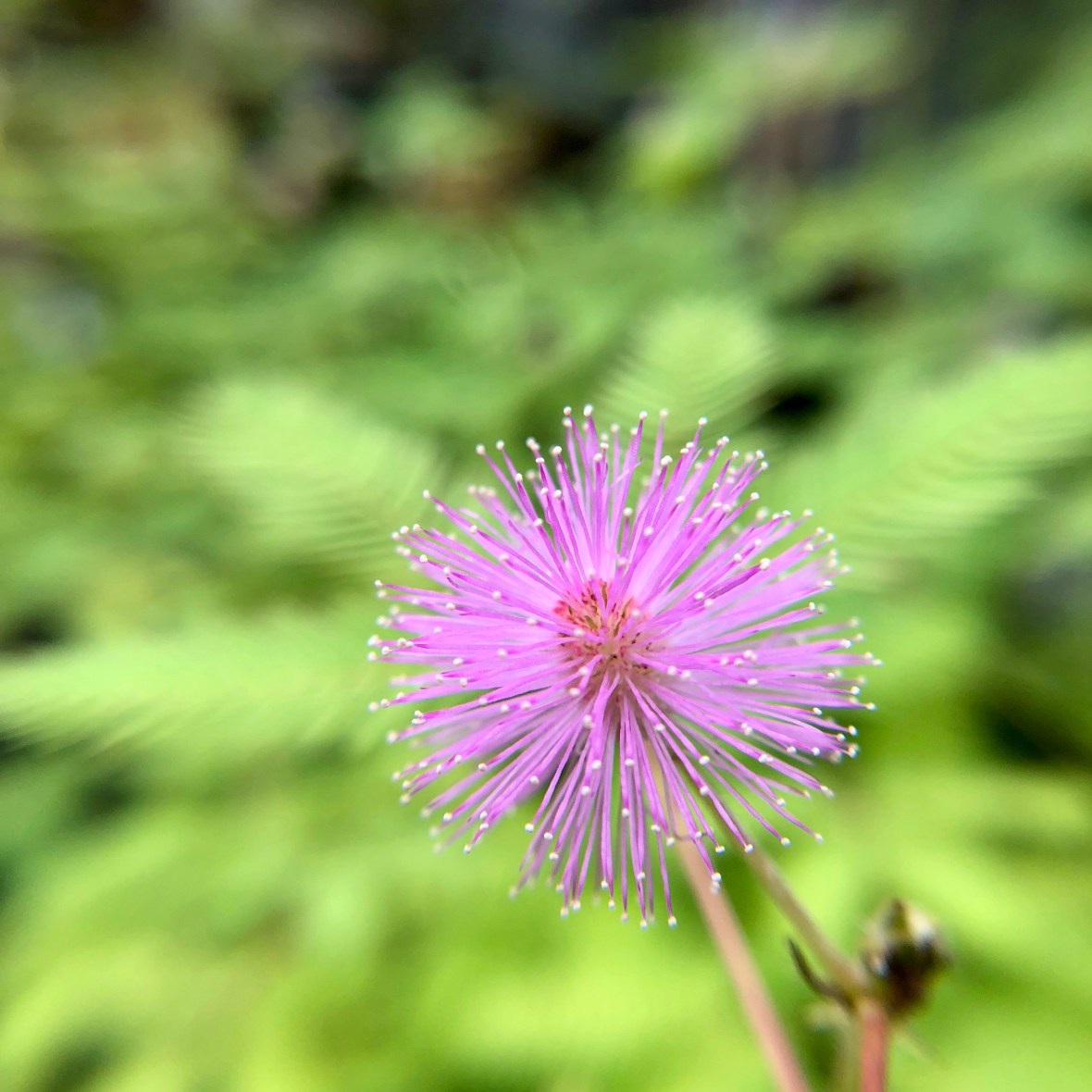
Flower of Mimosa pudica.
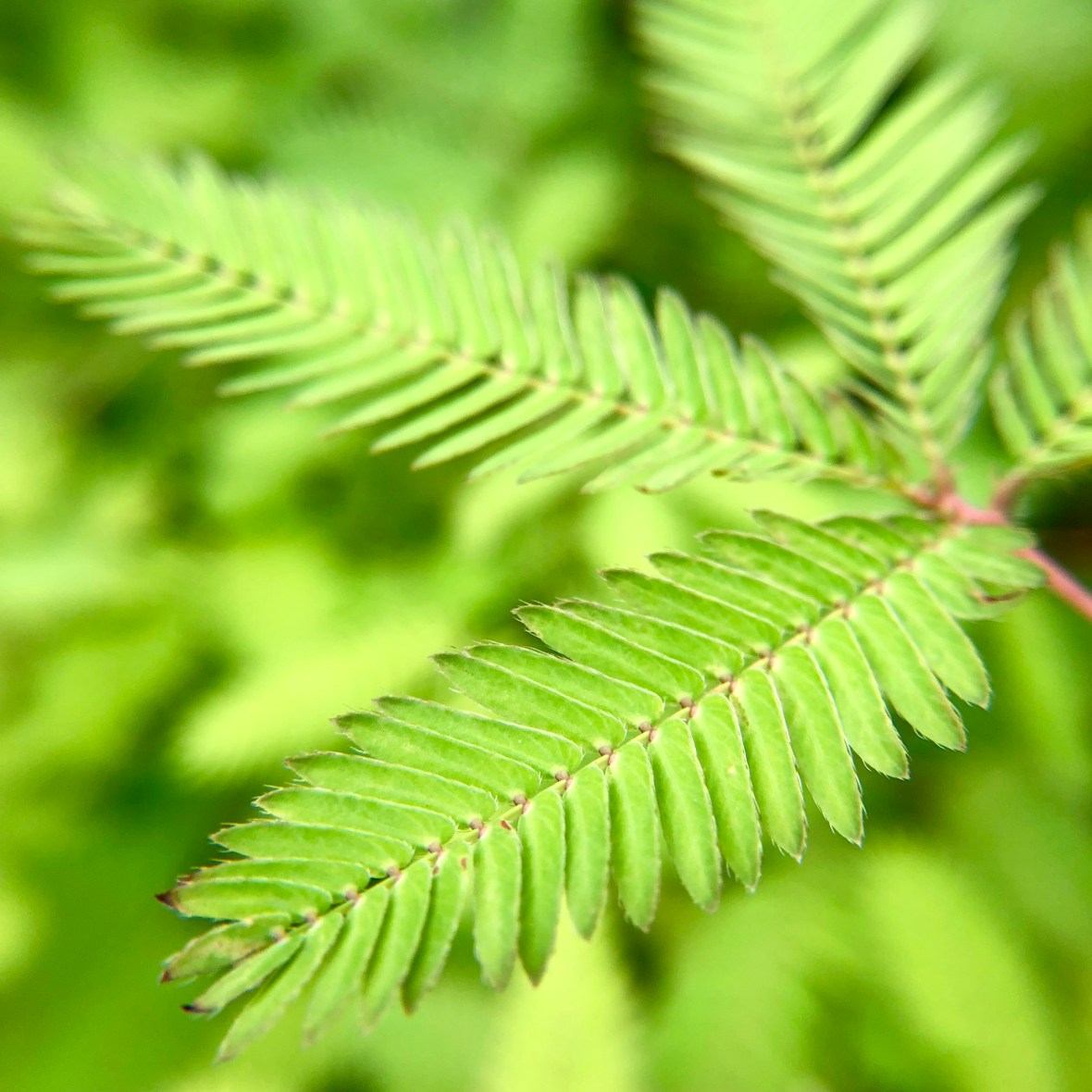
Mimosa pudica leaflets.
The sensitive plant is widely beloved for its unique “defensive” ability – folding when touched – and has captivated generations as a novel house plant. The mechanism and drive behind the plant’s bizarre behavior are not, however, ones of cognition, but are actually mechanical reflexes, much like those that trigger the “jaws” of a Venus flytrap. The explanation given by (wikipedia) of the mechanism is very technical, but basically, touching sensor hairs on the plant causes water to retract from the leaves and stems, and the rapid changes in water pressure force the plant to go limp, or “sleep.” This charismatic plant is great for entertaining at parties, or if you’ve got a bored significant other or child.
I hope you’ve enjoyed today’s plant profile!
Amy
 Plant Sense