It is definitely thought-provoking to realize that what you’ve discovered on your plants with naïve wonderment is actually, most likely, killing them. When I first noticed the soft, cotton-candy-esque webbing on my string of pearls and slid them under the microscope to take a look, I thought these tiny spider-like creatures were just the cutest. It wasn’t until I was later chatting with my co-worker that I put 2 and 2 together on these suspiciously mite-sized “spiders.” Oops.
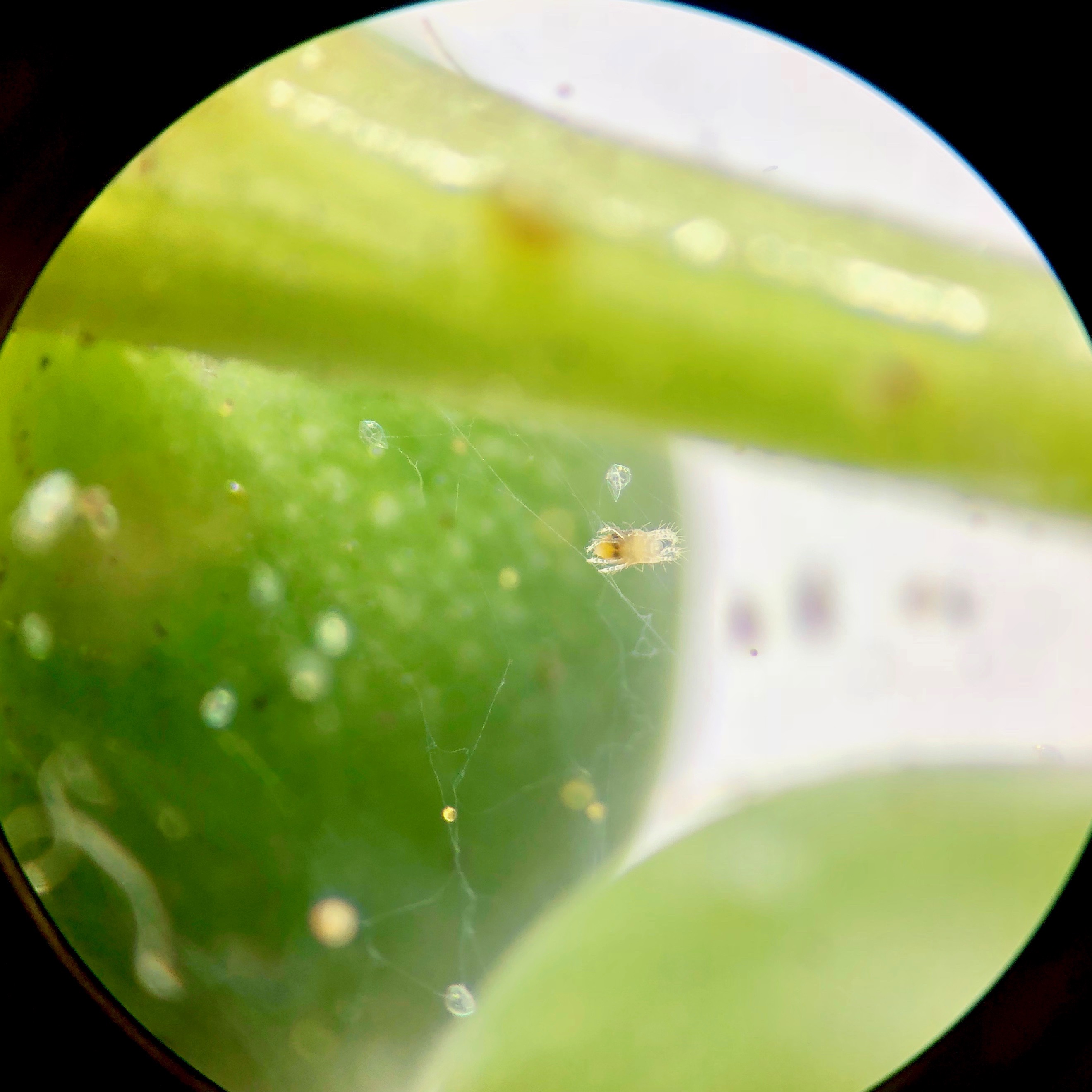
Once the embarrassment faded, the panic set in. Some quick Googling casually let me know that my pearls and the rest of my plants were doomed to suffer quickly a death at the tiny hands (paws?) of the spider mites. Not to be deterred, I dowsed the pearls in water and threw diatomaceous earth around until it looked like they’d been a casualty of the Great British Bake Off. Some later sleuthing revealed that the mites most likely came from Phyllis (the “mother plant” in this post), the lab’s voluptuous golden pothos. The evidence was in Phyllis’s deformed, yellowing leaves, as well as in the INCREDIBLY OBVIOUS webbing that coated a few of her leaves and stems. It’s amazing what you miss when you’re not looking.
So, what are spider mites? What do you do when you think you’ve found some? I’m glad you asked!

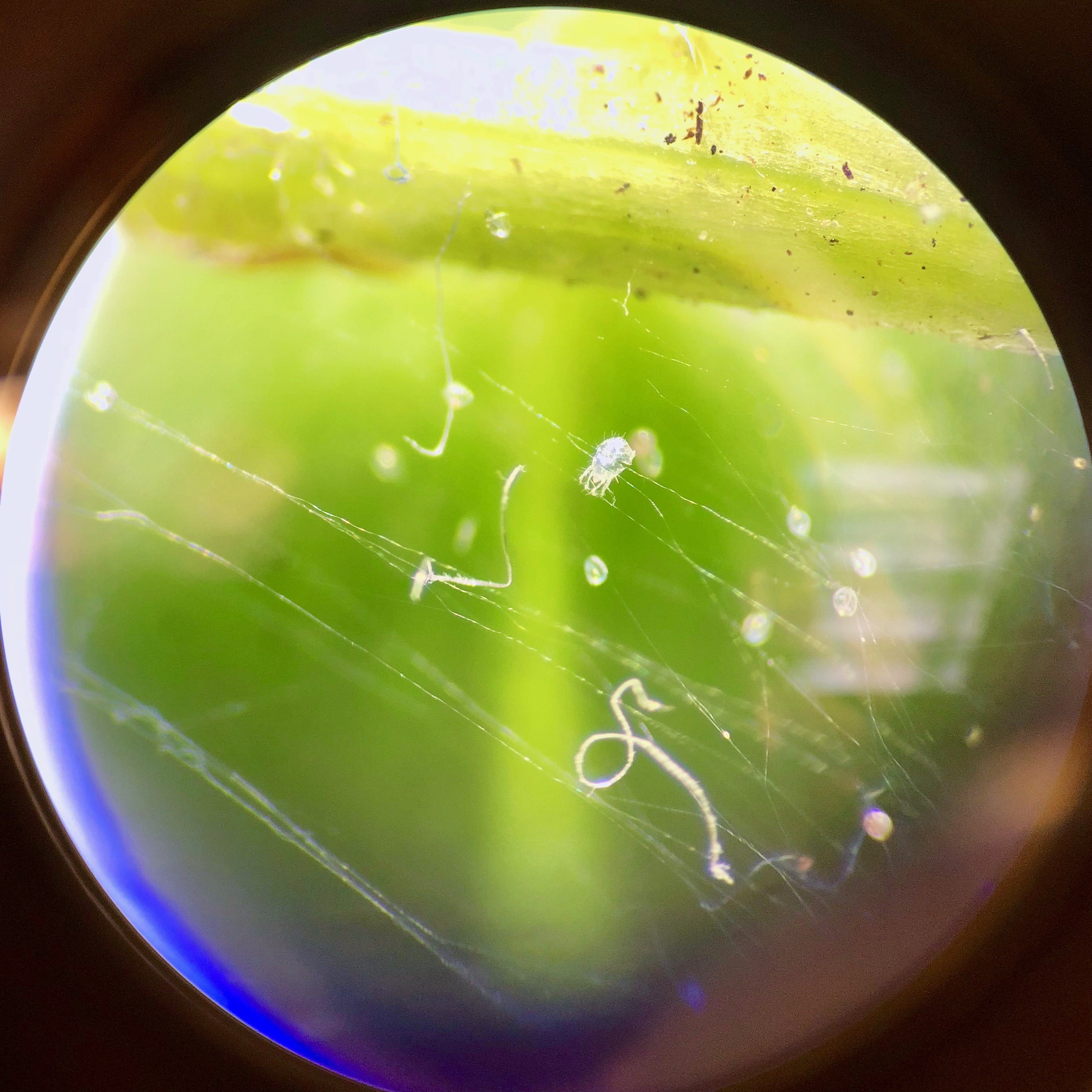
Spider mites are cute tiny arthropods belonging to the family Tetranychidae. They are not spiders, but house their colonies in spider-like webbing where a females’ eggs can hatch in as little as three days. They primarily live on the underside of leaves and colonies grow very quickly, puncturing the plant’s cells to feed on their sweet sap. This creates a speckled appearance on leaves, which may eventually turn yellow or brown and look sickly.
Good luck and happy planting!
Amy
 Plant Sense